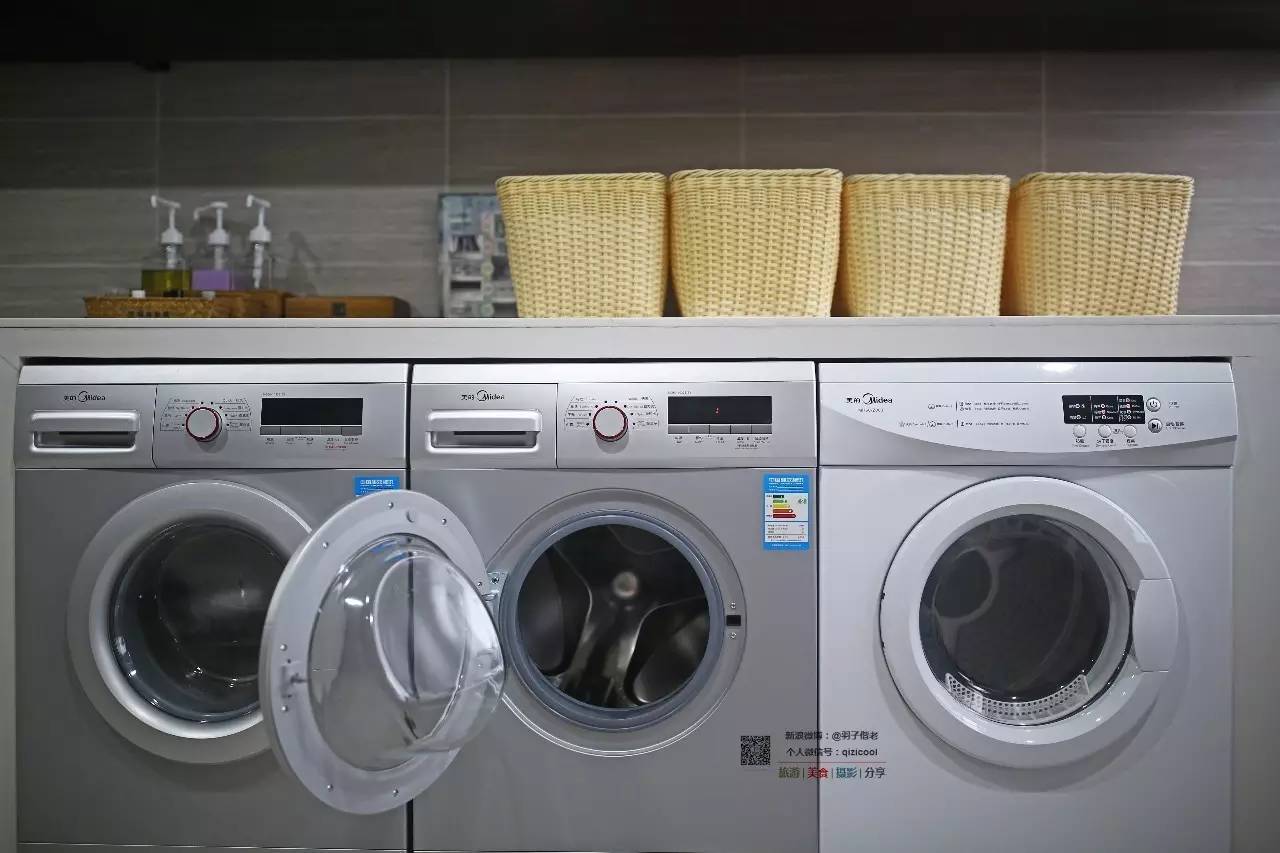
In the process of use, the washing machine will inevitably encounter failures. If you encounter the maintenance of the washing machine, who should I look for and how to repair it. Today, let's talk about the common faults of the automatic washing machine and how to solve them.
What are the common troubleshooting of automatic washing machine
Fault 1: stop the water inflow when the water inflow does not reach the set water level
Analysis and maintenance: this fault is mainly due to the poor performance of the water pressure switch, so that when the air pressure in the gas gathering chamber has not reached the specified pressure, the contact will change from the open state to the closed state in advance and stop water inflow. The specific reasons and treatment methods are as follows: (1) the precompression of the water level control spring of the water pressure switch becomes smaller, as long as the adjusting screw is screwed in to increase the pre compression shrinkage of the water level control spring solve. If the spring force of the water level control spring becomes smaller or loses its elasticity, the water level control spring shall be replaced. (2) The groove on the cam of water pressure switch is worn or damaged, which can be solved by replacing the cam.
Fault two: the water inflow must exceed the set water level more before stopping water inflow
Analysis and maintenance: this phenomenon shows that when the actual water level has reached the specified height, the air pressure in the air gathering chamber of the water pressure switch still can not reach the specified value, and the water pressure switch will act only if the water level continues to rise. The specific reasons and treatment methods are as follows: (1) the air connection nozzle of the water pressure switch gas collecting chamber is blocked or leaked. As long as the foreign matters at the air connection nozzle are removed, or 401 glue is used to seal the air leakage. If the air hose is aged, kinked or cracked, it should be replaced. (2) The precompression of water level control spring of water pressure switch is too large. Just screw out the adjusting screw to reduce the preloading shrinkage of the water level control spring. (3) The reversing ejector rod and transmission parts in the water pressure switch are deformed or damaged. It can be solved by repair and correction. If it is serious, the water pressure switch should be replaced.
Fault 3: when the program enters the washing state, the motor rotates normally, but the wave wheel does not rotate
Analysis and maintenance: the fault mostly occurs in the mechanical transmission part between the motor and the wave wheel. The specific reasons and treatment methods are: (1) the fastening screws of motor pulley, clutch pulley and wave wheel are loose, slipping or broken. Just re tighten or replace the fastening screw; if the square hole of the wave wheel is round, replace the wave wheel. (2) V-belt slipping or falling off. As long as the distance between the motor and the clutch is properly adjusted and some rosin powder is rubbed on the V-belt to increase the friction, it can be solved. If the V-belt is aged and deformed, replace the V-belt. (3) Clutch decelerating mechanism parts wear or damage, generally need to replace the clutch assembly.
Fault 4: when washing, the dewatering bucket follows
Analysis and maintenance: there are two situations for the dewatering bucket to follow, one is clockwise and the other is anticlockwise.
The specific reasons and treatment methods of clockwise follow-up of the dewatering bucket are as follows: the brake band is loose, which reduces the braking torque of the brake belt to the dehydration shaft, so long as the brake belt is re installed. The brake band is seriously worn or damaged. The position of the pawl can be adjusted properly by rotating the adjusting screw to increase the braking torque of the brake belt to the dehydration shaft. If it is serious, the brake belt should be replaced.
The specific reasons and treatment methods of counter clockwise rotation of the dewatering bucket are as follows: the clutch torsion spring falls off or breaks, or the torsion spring and dehydration shaft fit too loose and slip, so that the torsion spring loses the anti reverse function. As long as the torsion spring is re installed or replaced, the reducer should be replaced when it is serious. Clutch brake band loose, worn or broken. Just re tighten or replace the brake band. The clutch brake spring or fork spring is too soft or broken. As long as the clutch brake spring or fork spring can be replaced.
Fault 5: when washing, the motor runs normally in the forward and reverse directions, while the wave wheel can only reverse in one direction and cannot rotate forward
Analysis and maintenance: this fault is caused by the deformation of clutch pawl fork or the screw of adjusting screw is too deep, so that the working position of pawl cannot be in place, resulting in the failure of washing shaft and dehydration shaft.
Because the clutch pawl working position is not in place, the square wire clutch spring can not be pulled loose, so that the washing shaft and dehydration shaft are held tightly by the clutch spring, and the dehydration shaft is held tightly by the brake belt in the washing state. When the clutch pulley rotates clockwise, it cannot drive the wheel to rotate. When the clutch pulley reverses anticlockwise, it is not only the loosening direction of clutch square wire clutch spring to separate the washing shaft from the dehydration shaft, but also the tightening direction of clutch button spring. The dehydration shaft is still held tightly by the brake band, and the wave wheel can rotate in reverse direction.
First, adjust the adjusting screw properly to make the clearance between the pawl fork and the brake lever within the normal range. If the pawl fork is deformed and damaged, it can be repaired and corrected. If it is serious, the problem can be solved by replacing the pawl fork.
Fault 6: slow drainage speed
Analysis and maintenance: this fault is generally caused by the drain valve is not fully opened or the drainage pipeline is not smooth. The specific reasons and treatment methods are as follows: there are impurities in the drain valve or the drain hose is bent and deformed. As long as the internal drain valve is removed, the drain valve can be replaced. The clearance between the drainage rod and the rubber valve becomes larger, as long as the clearance between the drainage rod and the rubber valve is properly adjusted. The spring in the drain valve is too long or elastic. Just replace the inner spring. The dynamic core damping of the drain solenoid valve is too large or the suction is smaller. Remove the rust and dirt in the electromagnet or replace the drain solenoid valve.
Fault 7: dirty drainage
Analysis and maintenance: this fault is generally due to poor performance of water pressure switch or air leakage of air pipeline, which makes the air pressure in the gas gathering room smaller. When the water level in the water tank has not dropped to the specified position, the contact of the water pressure switch will act in advance, shortening the total drainage time and leading to unclean drainage. Just try to find the air leakage of the air pipeline and seal it with 401 glue. If the water pressure switch is damaged, replace the water pressure switch.
Fault 8: after dehydration, the braking time is too long
Analysis and maintenance: the fault is caused by the brake belt can not hold the brake wheel of dehydration shaft, so that the braking friction is reduced. The specific reasons and treatment methods are: the brake belt on the clutch is installed askew, the lining is worn or the fastening screw is loose. Just re install or replace the brake band. The brake spring is loose, broken or elastic. Just re install or replace the brake spring. The brake rod cannot return to its original position when it is supported by the pawl fork, so that the brake belt cannot hold the brake wheel of dehydration shaft tightly. As long as the position of the pawl fork is adjusted, repaired or replaced. (4) The moving iron core of electromagnet is blocked by foreign matters and can not be fully extended, so that the brake lever can not be restored to its original position. It is only necessary to remove the rust on the moving core of the electromagnet or replace the electromagnet.
Fault 9: during dehydration, the dewatering bucket has large vibration noise
Analysis and maintenance: the specific causes and treatment methods of vibration and noise of dewatering bucket are as follows: there are impurities between dewatering bucket and washing bucket. Just remove the debris. The balance ring of the dewatering bucket breaks or leaks, which makes the dewatering bucket lose balance when it rotates. As long as the balance ring is replaced, it can be solved. The fastening screw of flange plate of dewatering bucket is loose or cracked. Just tighten or replace the flange. The dehydration bearing is seriously worn or loose. As long as the dehydration bearing is tightened or replaced.
Washing machine maintenance skills
1. Regular maintenance
It is necessary to check the foot pad of the washing machine every 1-2 months. The washing machine should be kept in the most balanced state, otherwise it is easy to generate noise.
2. Regular maintenance
Open the cover of the washing tank from time to time and let it dry in order to prevent mould breeding. When the washing machine is not used for a long time, the plug of the washing machine should be pulled out.
3. Regular maintenance
The control panel and the part close to the plug of the washing machine should be kept dry as far as possible; in case of electric leakage, that is, the part of the electric wire has been damaged, it should be repaired immediately. The grounding wire can not be connected to the gas barrel or gas pipe, so as to avoid danger.
4. Pay attention to fire prevention
Please do not put the laundry into the washing machine if it is stained with volatile solvents to prevent fire or gas explosion. When washing clothes, please remove the matches, coins and other items in your pocket, and zip up the clothes to prevent the washing tank from being damaged.
5. Safe washing
Do not touch the water tank with your hands before it stops rotating completely. Do not let children climb into the washing machine to avoid dangerous accidents.