Jasmine is a strong positive flower, which needs more sunshine. The high temperature season in summer is its vigorous growth period. Therefore, there is a saying that "the Jasmine can't die in the sun". So, do you know how to fertilize Jasmine in the family potted cultivation?
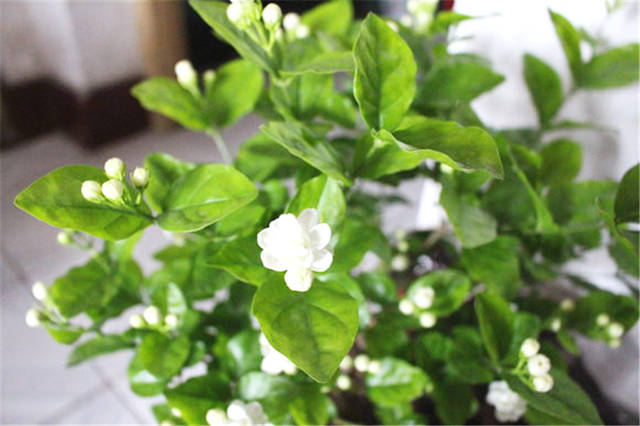
Jasmine is fond of fertilizer. High temperature season in midsummer is the vigorous growth period of jasmine. It is necessary to apply heavy fertilizer, organic fertilizer and phosphorus and potassium fertilizer, such as rotten hemp sauce residue, superphosphate, compound fertilizer and multi-element flower fertilizer, twice a week. Families can use kitchen waste and alum retting liquid fertilizer. The principle of applying fertilizer frequently should be grasped.
Pay attention not to apply fertilizer when the basin soil is too dry or too wet. The best fertilization effect is when the basin soil is dry but not dry. If Jasmine only grows branches but does not bloom, it is caused by excessive nitrogen fertilizer and insufficient sunlight. If more phosphorus and potassium fertilizer are applied, it is generally not difficult to conceive buds and blossom if more phosphorus and potassium fertilizers are applied.
Other maintenance points and precautions of family potted Jasmine
1. Soil:
It is better to cultivate Jasmine in fertile sandy or semi sandy soil. In the pH value of 6.0-6.5 in the slightly acidic soil, so that the root system is dense and strong, and the soil is sticky and low fertility, then the root system is less, the plant is short, the stems and leaves are thin, and the flowers are few and small.
2. Illumination:
Jasmine like hot, humid, ventilation and ventilation environment, it is long sunshine, like positive plants, need sufficient light, more than 5 hours of light every day is appropriate. Jasmine is afraid of cold. In central and South China, Jasmine can be cultivated outdoors to survive the winter. In the north, it is necessary to keep warm in autumn. When moved indoors, it should be placed in the sunny place facing south. Strong light makes the branches strong, dark green leaves, more flowers, good coloring and strong fragrance. Therefore, if you want more jasmine flowers, you must have a good environment and sufficient light.
3. Moisture content:
Jasmine is not resistant to drought, but also avoid ponding. In rainy season, it is necessary to remove the water in the basin or planting land in time, otherwise the leaves are easy to turn yellow, commonly known as water yellow. In hot and sunny days in summer, water twice a day, once in the morning and in the evening. If you find the leaves curling up, you should spray water on the leaves.
4. Pruning:
Jasmine grows very fast in summer, so it should be pruned in time. After pruning, the base of jasmine should be kept 10-15 cm to promote the development of thick new shoots. If the new branches are growing vigorously, they should be picked off when they grow 10 cm, and the secondary shoots will bloom more and the plant shape is compact. After the flower withers, the flower branch should be cut off to reduce the nutrient consumption.
5. Pest control:
Jasmine is often damaged by scale insects and red spiders, and the most serious damage is from July to September. It can be sprayed 1000 times of 50% phoxim EC, once every half month, 2-3 times continuously.
Tips: don't spray water on the flowers during the flowering period to prevent the early falling of flowers and the disappearance of fragrance. Cover the rain or move the jasmine indoors in case of rainstorm. The pot should be changed in 3 years, and the time should be at the end of winter and the beginning of spring. No need to cut the root, replace with new nutrient soil, and put some bone meal and horseshoe as base fertilizer at the bottom of the pot, and pour water through it.