Urban pollution is becoming more and more serious. Some people at home are used to closing the windows tightly. Obviously, they don't want the polluted air outside to invade the interior. However, scientists have found that even in big cities with heavy traffic, outdoor air is cleaner than indoor air. Why? One reason is that green plants keep purifying the outdoor air. Therefore, those who often stay at home or in the office should add some plants to the interior, but there are too many kinds of plants on the market. It seems that all plants are under the banner of "purifying the air". Which one should we choose? Today, we will separate a few plants to say, these plants may not be very impressive, but very popular with friends, hurry to see what plants there are!
1. Cymbidium
Natural scavenger, can remove harmful substances in the air. A pot of tiger tail orchid can absorb more than 80% harmful gases in the room about 10 square meters.
Huweilan is a perennial herbaceous plant, varieties of which are Phnom Penh and silver vein. Flowers are isolated from the rhizome, racemes, pale white, light green, 3 to 5 in a bunch, born on the inflorescence axis. If you are not used to it, you can move it far away.
It is native to Western and southern Africa. Sex likes warm and sunny environment. Resistant to half shade, afraid of sun exposure. Drought resistance, avoid water. It is suitable for sandy soil with good drainage.
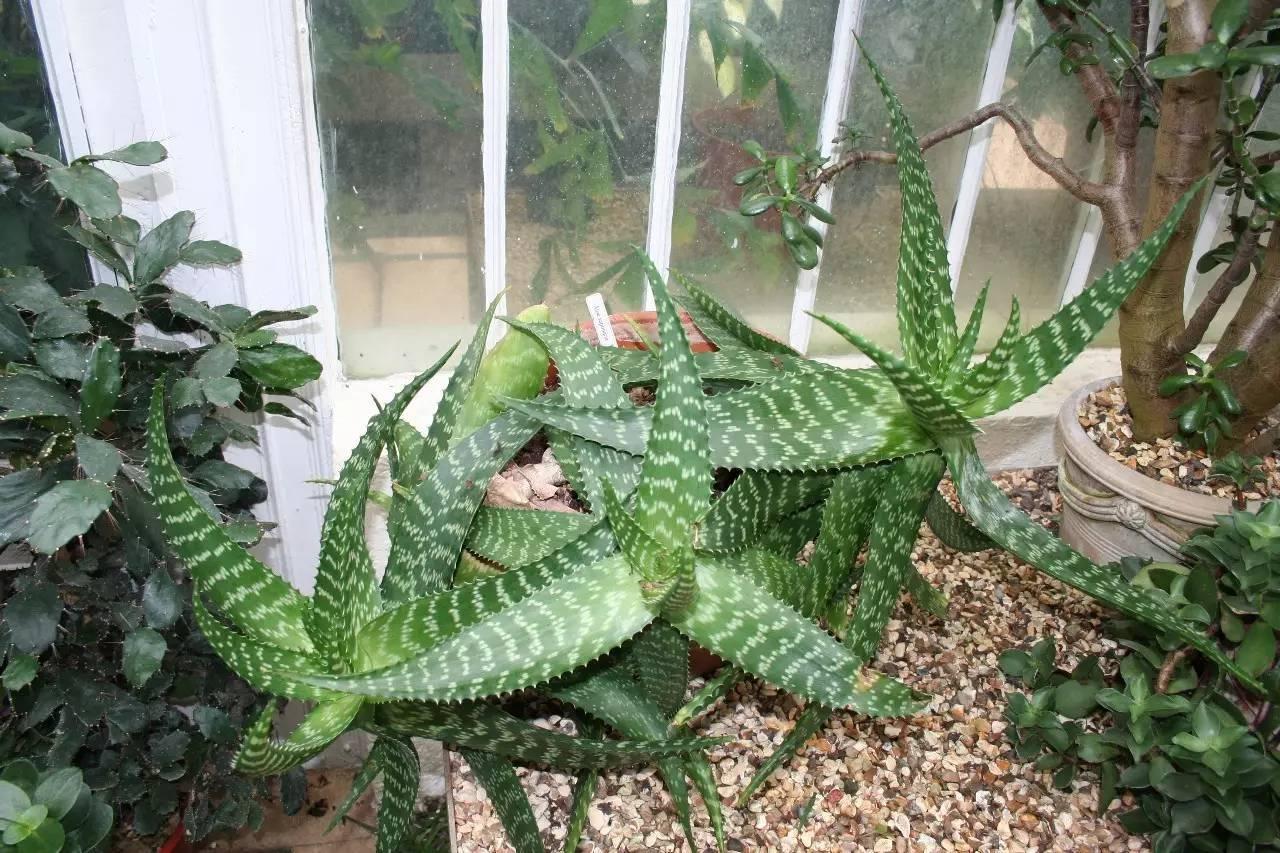
2. Aloe Vera
Aloe can beautify and purify the air. Evergreen aloe has a certain function of absorbing peculiar smell and has a longer action time.
Native to the Mediterranean and Africa, it is a perennial herb of monodon family. The leaves are clustered, in the form of a seat or on the top of the stem. The leaves are often lanceolate or short and wide, with sharp toothed spines on the edge. The inflorescence is umbelliform, racemose, spike shaped and conical, with red, yellow or red spots, with six petals and six pistils.
Aloe likes to grow in loose soil with good drainage performance and not easy to harden. General soil can be mixed with some gravel ash, such as the addition of rotten leaf ash and so on is better.
3. Ficus pendula
Xylene, toluene, trichloroethylene, benzene and formaldehyde can be absorbed by the leaves and roots of Hibiscus penduliformis, and decomposed into non-toxic substances.
It is an evergreen tree of Ficus microcarpa. Air root, bark, leaf bud and fruit can be used for clearing heat and detoxification, expelling wind and cooling blood.
It is only found in Yunnan (Jinping, Honghe, Xishuangbanna, Gengma) and other places in China. Nepal, northeast India, Vietnam, Thailand, the Philippines and Papua New Guinea also have them. It is a kind of heat resistance, drought resistance, humidity resistance, wind resistance, shade resistance, pollution resistance, shear resistance, easy transplantation. Positive, like high temperature and humid climate.
4. Milan
Milan is known as a natural scavenger, which can remove harmful substances from the air. Light fragrance, elegant.
Milan is an evergreen shrub or small tree. It is native to southern Asia. It is widely planted in the tropics of the world. It is distributed in Fujian, Guangdong, Guangxi, Sichuan and Yunnan. There are also many potted plants in the north.
Milan likes warm, humid and sunny environment. It is not resistant to cold and shade. The loose and fertile slightly acidic soil is the best. The temperature in winter is not lower than 10 ℃. Milan likes to be wet, and it should be watered properly during the growth period.
5. Millennium wood
Xylene, toluene, trichloroethylene, benzene and formaldehyde can be absorbed and decomposed into non-toxic substances by leaves and roots. Millennial tree, also known as Zhujiao, is a shrub plant of Agave family. It is also a medicinal plant. Its flowers, leaves and roots can be used as medicine. Guangxi people in China used to treat hemoptysis, hematuria, bacillary dysentery and other diseases. The main stem is erect and straight, the stem is 1-3 meters high, not branched or less branched. The flowers are light red to cyan purple with yellowish color. It is distributed in the tropical area of southern China. More than the garden cultivation, for the foliage plant. Zhujiao is beautiful in shape, gorgeous and elegant in color, and has good ornamental value.
Zhu Jiao likes high temperature and humid climate. It belongs to semi shade plant. It can't bear the scorching sun in North China. Its leaves are easy to turn yellow and cold resistant. Except for Guangdong, Guangxi, Fujian and other places, it is only suitable to be potted in greenhouse. It requires acid soil with rich humus and good drainage, and alkali soil is avoided.
6. Phyllostachys heterophylla
Bamboo is a natural scavenger, can remove harmful substances in the air.
Phyllostachys heterophylla is an evergreen vine. Evergreen climbing foliage plants of Araceae have brown aerial roots on their stems, which are shaped like electric wires. Therefore, they are called "Clematis". The leaves are oval and shaped like tortoise shells between the pinnate veins. Many oblong holes and deep fissures are scattered. The shape of the plant is similar to the pattern of tortoise shell, and the stem has nodes like bamboo trunks, so it is named "turtle back bamboo".
Native to the tropical rain forest of Mexico, it likes warm and humid environment, avoids direct sunlight and is not resistant to cold.
7. Green Rose
It is native to the Mexican plateau. Because it can purify benzene, trichloroethylene and formaldehyde in the air at the same time, it is very suitable to be placed in the newly decorated room. New flooring is just one of the sources of harmful substances.
Large evergreen lianas. Growing in tropical areas, often climbing, growing on the rocks and trunks of rainforests, can grow into giant lianas. It has strong twining and developed air roots. It can not only be attached to the column made of brown, placed in the hall and hotel, but also cultivated into a hanging shape and placed in the study and window sill. It is a kind of flower suitable for indoor display.
8. Rhododendron fortunei
It can remove harmful substances in the air and purify the air.
Chlorophytum chrysanthum is an evergreen perennial herb, with rhizomes in the underground part, slender leaves, linear lanceolate, yellow and white longitudinal stripes in the center, and bright green at the base. South Africa, like warm and humid, like half shade, summer avoid hot sun, soil requirements loose and fertile, room temperature 20 ℃, stem and leaf growth rapidly, winter temperature requirements not less than 5 ℃.
9. Chrysanthus
It can absorb carbon dioxide and release oxygen day and night.
Euphorbia fortunei is the representative of the strong thorn ball cactus. It is native to the dry and hot desert from San Lui Potosi to idargo in central Mexico. The wild Euphorbia fortunei is an extremely endangered rare plant. This species is one of the most attractive cactus plants. It has a round green sphere and steel hard golden yellow hard thorn. The diameter of the sphere can reach about 1 meter, and the top of the ball is densely covered with golden yellow villi.
Strong habits. Like calcareous soil, like dry, like warm, like the sun, require sufficient sunshine, fear of cold, avoid wet, good in calcareous sandy soil.
10. Chlorophytum
Chlorophytum viridis has a strong function of absorbing toxic gases, which is called green purifier. No choice of soil, light requirements are not strict.
11. Brazilian iron
Brazil iron, also known as Xianglong blood tree, can remove harmful substances in the air.
Its scientific name is Xianglong blood tree, also known as Brazilian iron tree, Brazilian Millennium tree and golden border citron blood tree. It is an evergreen tree of Liliaceae family.
It is a little shade tolerant and likes high temperature. When it is lower than 13 ℃, it goes into dormancy and stops growing. It likes loose and well drained soil, and likes rotten leaf soil or peat soil when potted.
12. Sunflower
Its green palm leaves have a very effective purification effect on xylene and formaldehyde.
The leaf is one of the main leaf materials in the whole field of leaf cutting. It is in short supply in the market every year, and the price in winter is very high.
Also known as yellow coconut, is a clump of evergreen shrubs or small trees. They prefer warm, humid, semi cloudy and well ventilated environment, and the minimum temperature of overwintering should be above 10 ℃.